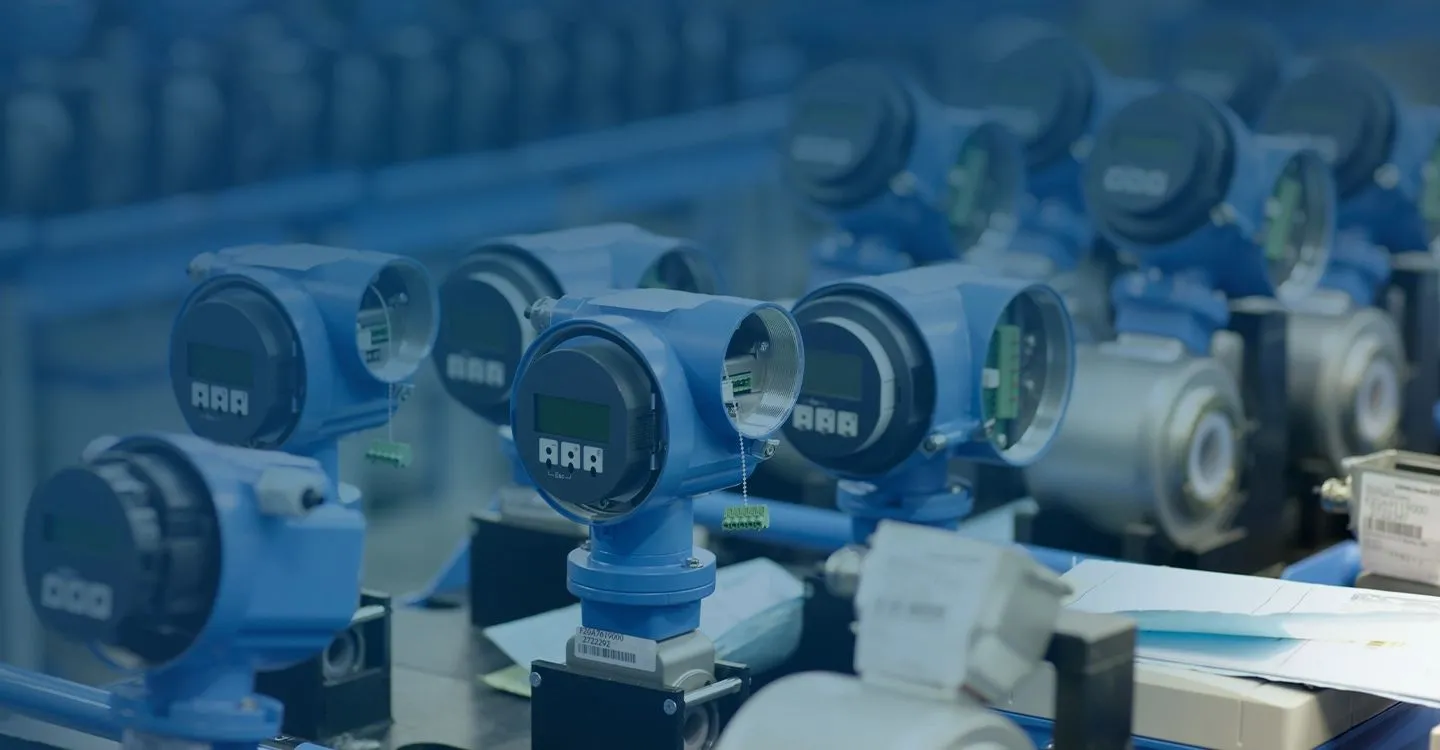
The visibility of a process in an industrial plant largely relies on its ability to accurately measure the parameters involved. The measurement of steam flow, energy utilization, utility flow rate, chemical dosing control, among others, calls for the availability of a highly dependable Flowmeter. The choice of a Flowmeter is not always dictated by factors such as flow rate or pipe diameter but involves other considerations.
Flow meters at Anasia Process Automation are tailored to meet the needs of the particular application. It means that there must be an appreciation of the types of flow measurements available in order to select the most appropriate Flowmeter.
Table of Contents
What Is a Flowmeter?
A Flowmeter is an instrument designed to measure the movement of liquids, gases, or steam through a pipeline or process system. A Flow meter provides operational data used for:
- Process control
- Energy management
- Custody transfer
- Safety monitoring
- Utility optimization
- Production balancing
Modern industrial facilities rely on advanced Flowmeter technologies to improve efficiency, reduce waste, and maintain process stability.
Depending on the process, a Flow meter may measure:
- Volumetric flow
- Mass flow
- Velocity
- Differential pressure
The knowledge of various flow measurement devices will help engineers choose the best technology for the job.
Importance of the Right Flowmeter
The selection of an improper Flowmeter may result in unreliable measurements, maintenance problems, pressure losses, or inadequate process control.
Flow Meter evaluation at Anasia Process Automation starts by knowing:
- Fluid properties
- Process temperature and pressure
- Installation constraints
- Required accuracy
- Maintenance expectations
Various types of flow measuring devices are developed based on their application. A device that works perfectly in gases cannot work effectively in viscous liquids and steam.
Flow Meter Types
Several types of flow meters are employed in industrial processes on account of their particular principles of operation.
Electromagnetic Flow Meter
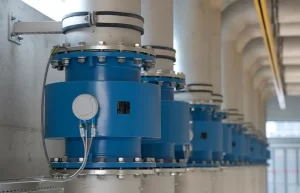
This is one of the common types of flow meters used in the measurement of conductive fluids.
The Electromagnetic flow meter works in accordance with the electromagnetic principle of operation by generating voltage through fluid movement within a magnetic field.
The Electromagnetic flow meter can be used in:
- Water and wastewater
- Chemical processing
- Food and beverage applications
The absence of moving parts is one of the key strengths of the Flow Meter technology because of which it requires lower maintenance.
Coriolis mass flow measurements are used at Anasia Process Automation due to their superior accuracy with minimal pressure loss in comparison to other types of flow measurement methods.
Coriolis Mass Flow Measurement
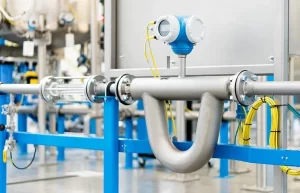
Of all the types of flow measurement technologies that have been developed, Coriolis flow measurement is very accurate.
This technology employs a Coriolis Flowmeter that works on the basis of vibrations within its tubes.
A Coriolis Flow meter is capable of measuring the following simultaneously:
- Mass flow
- Density
- Temperature
This makes the technology highly suitable for:
- Oil & gas
- Chemical dosing
- Pharmaceutical production
- High-accuracy applications
At Anasia Process Automation, Coriolis systems are often recommended when process conditions demand precise mass flow measurement independent of pressure or temperature variations.
Thermal Mass Flow Measurement
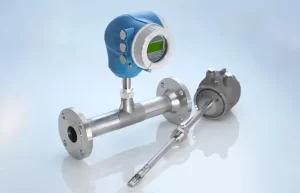
Thermal technology represents one of the most effective types of flow measurement for gases.
A thermal mass Flowmeter operates using convective heat transfer. As gas flows past a heated sensor, the cooling effect is measured and converted into mass flow data.
A thermal Flow meter is commonly used for:
- Compressed air monitoring
- Nitrogen and oxygen systems
- Utility consumption measurement
- Industrial gas distribution
One major advantage of this Flowmeter technology is direct mass flow measurement without requiring external pressure compensation in many applications.
Anasia Process Automation provides thermal systems designed to optimize industrial gas monitoring and energy efficiency.
Ultrasonic Flow Measurement
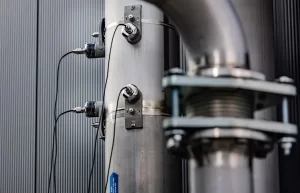
Ultrasonic technology has become increasingly important among modern types of flow measurement due to its non-intrusive operation.
An ultrasonic Flowmeter measures flow using sound waves transmitted both with and against the flow direction. The difference in transit time determines the flow rate.
An ultrasonic Flow meter offers:
- Minimal maintenance
- No pressure drop
- Installation without cutting the pipe
- Suitability for large pipelines
- Ultrasonic systems are commonly applied in:
- Water distribution
- Energy systems
- Utility monitoring
- Retrofit applications
At Anasia Process Automation, ultrasonic technologies are often selected when maintenance access or process interruption must be minimized.
Differential Pressure Flow Measurement
Differential pressure systems remain among the most established types of flow measurement in industrial applications.
A differential pressure Flowmeter measures the pressure drop created by a restriction element such as an orifice plate or Venturi tube.
A DP-based Flow meter is widely used for:
- Steam systems
- High-pressure gas applications
- Power generation
- Chemical processing
Despite newer technologies, DP systems continue to be popular due to their simplicity and versatility across multiple industries.
Key Factors When Choosing a Flowmeter
Selecting the correct Flowmeter requires balancing several technical factors.
- Process Medium
- Liquids, gases, and steam each require different types of flow measurement.
- Accuracy Requirements
- Some applications require custody-transfer-level precision, while others prioritize trend monitoring.
- Installation Conditions
- Pipe layout, vibration, and available straight run affect Flow meter performance.
- Pressure Loss
- Certain Flowmeter technologies introduce pressure drop, while others operate non-intrusively.
- Maintenance Expectations
- Different types of flow measurement have different calibration and maintenance requirements.
At Anasia Process Automation, these parameters are evaluated collectively to ensure the selected Flow meter matches long-term operational goals.
Discover: What is K-Factor in Flow Meter
Why Application Knowledge Matters
No single Flowmeter technology is suitable for every application. A thermal gas solution may fail in liquid service, while an electromagnetic Flow meter requires conductive media to operate correctly.
Understanding the strengths and limitations of different types of flow measurement is essential for maintaining reliable process data.
Anasia Process Automation works closely with industrial operators to evaluate:
- Flow behavior
- Media properties
- System integration
- Future scalability
- Operational reliability
This application-focused methodology helps ensure that each Flowmeter delivers stable performance under real process conditions.
Conclusion
Flow measurement plays a critical role in industrial efficiency, safety, and process control. Selecting the correct Flowmeter requires understanding the process medium, operating environment, and the available types of flow measurement technologies.
Whether using electromagnetic, Coriolis, thermal, ultrasonic, or differential pressure technologies, the right Flow meter can significantly improve process visibility and operational performance.
Through advanced instrumentation solutions and application-driven engineering, Anasia Process Automation delivers reliable Flowmeter technologies designed for the demands of modern industry, also explore solutions for projects.