
Refining plants function in an environment where pressure, temperature, and exposure to chemicals reach their severest levels. In this case, not the intended reliability, but operational reliability over years defines performance. In this context, critical valves used in refining processes are among the most critical factors in maintaining plant integrity.
At Anasia, refinery valve selection is approached as a risk-management discipline. Critical valves for the refining process are treated as engineered safeguards that directly influence safety, uptime, and process continuity.
Table of Contents
Why Valve Reliability Defines Refining Performance
Refining unit operations involve using valves to control fluid flow, isolate processing equipment, transition during mode changes, and accomplish emergency shutdown functions. Unlike other secondary services, processing takes place in extreme and dynamic environments.
In such a setting, critical valves used in refining processes need to function consistently despite thermal and pressure variations, or media hostility. As far as Anasia’s experience is concerned, any slight degradation in valves can lead to instability in a unit, production losses, or a forced shutdown.
Operating Conditions That Elevate Valves to Critical Status
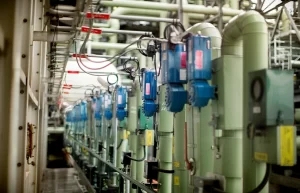
Thermal and Mechanical Stress
High-temperature processes such as catalytic reforming, regeneration, and hydrotreating subject valves to continuous expansion and contraction. Critical valves for the refining process must retain dimensional stability and sealing performance throughout these cycles.
Aggressive Process Media
Refining streams often contain corrosive compounds, catalyst fines, and erosive particulates. Internal valve components are exposed to sustained wear. Anasia specifies critical valves for the refining process that are proven to withstand long-term exposure without loss of function.
Repetitive and High-Cycle Operation
Sequencing, isolation, and safety services demand frequent actuation. Valves not designed for this duty suffer accelerated fatigue. Properly engineered critical valves for the refining process are built to sustain high cycle counts with consistent torque and response.
Principles of Engineering in Selecting a Valve
In Anasia, describing critical valves for the refining process begins with understanding a refining process, not a catalog.
Valve Design
Metal-seated ball valves and control valves for heavy service can be chosen based on their tight-shutoff capabilities in heavy-duty operations. Seat designs and internals of such valves are optimized to withstand erosion effects. Such requirements are very important for critical valves for refining processes operating in heavy-duty service.
Materials of Construction
Material selection in alloys is influenced by temperatures, corrosion resistance, and pressure class. Anasia makes sure that materials used in critical valves for the refining Process adhere to standards in a refinery setting rather than relying on nameplates.
Actuation Reliability
Valve performance is inseparable from actuator performance. The actuator must have a constant torque during normal operating and emergency shutdown conditions. Anasia can provide critical valves for the refining process and actuation systems for stable performance under thermal and mechanical stress.
Maintenance and Service Life
Downtimes in a refinery can pose serious financial and safety hazards. Anasia focuses on critical valves for the refining process with predictable maintenance, field serviceability, and a refinery operational life.
Impact on Refinery Operations
Therefore, when properly designed and used, critical valves for the refining process aid:
- Versatile unit operation under varying loads
- Lower risk of unplanned shutdowns
- Enhancing safety system reliability
- Reduced frequency of lower maintenance interventions
Optimized total cost of ownership
The operational reviews carried out by Anasia show that the reliability of valves is an emerging factor in unit performance.
Anasia’s Importance in Mission-Critical Refining Processes
Anasia collaborates with refinery stakeholders in order to assess process conditions, failure modes, and operating priorities before coming up with recommendations for critical valves for the refining process. Here, valves are identified based on actual operating requirements and not on assumptions.
Through integration of valve design, materials, and operation with actual working parameters, Anasia is able to provide critical valves for the refining process with reliable performance over the entire operating life of an asset.
Conclusion
Refining environments leave little margin for error. Valves operating in these systems must perform flawlessly under continuous stress. Selecting the right critical valves for the refining process is therefore a strategic engineering decision with direct consequences for safety, reliability, and profitability.
Through application expertise and disciplined selection practices, Anasia provides Critical valves for refining process engineered to meet the realities of modern refining operations. In mission-critical service, reliability is not assumed—it is designed, specified, and proven.